How to Use Pinterest to Expand the Reach of Your Podcast (and Everything Else You’re Building)
How to Use Pinterest to Expand the Reach of Your Podcast (and Everything Else You’re Building)
Podcasting is a powerful medium. But here’s the truth: if you’re only sharing your episodes on social and waiting for listeners to find you, you’re missing one of your biggest opportunities for long-term growth.
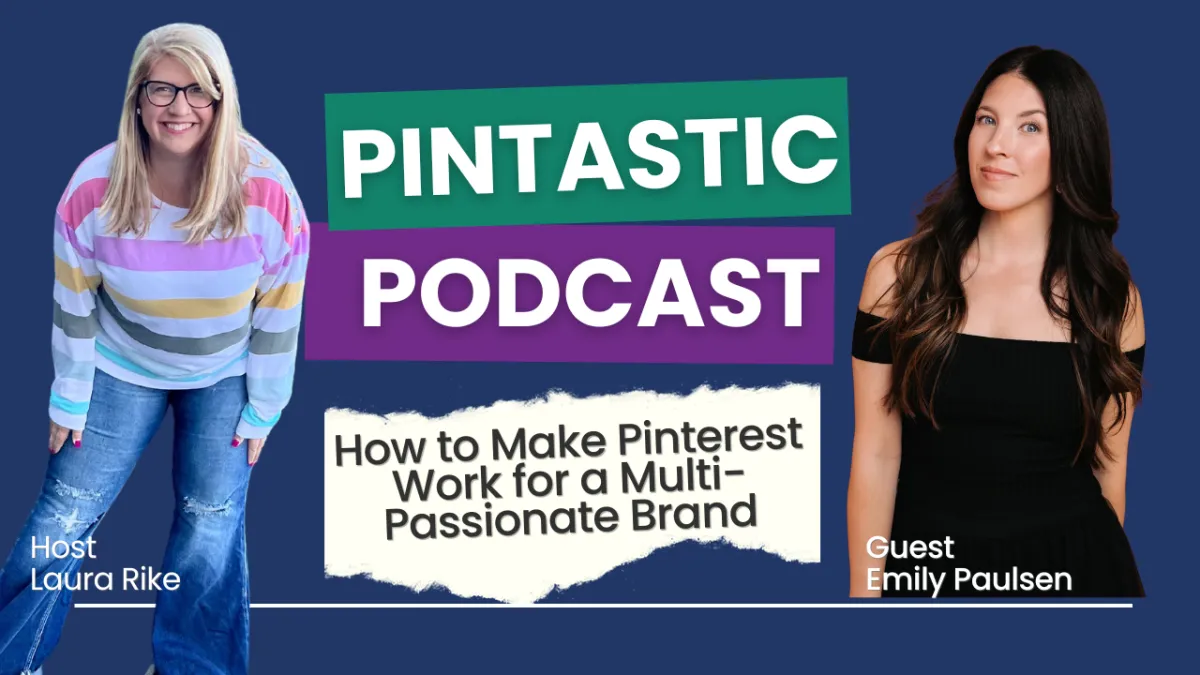
That’s exactly what we talked about on this week’s episode of The Pintastic Pinterest Podcast with brand strategist and podcast host Emily Paulsen, creator of Curious Life of a Childfree Woman. She came into the session with the same questions so many creators and content-driven business owners have:
How are people actually using Pinterest in 2025 and beyond?
How do I get my podcast in front of the right people, especially if I talk about a variety of topics?
And where do I even start when it comes to boards, pins, or strategy?
Whether you’re running a podcast, publishing a Substack, or building a personal brand that touches multiple areas of life and business, this post is going to help you turn Pinterest into a reliable engine for discovery.
How to Use Pinterest to Expand the Reach of Your Podcast (and Everything Else You’re Building)
How to Use Pinterest to Expand the Reach of Your Podcast (and Everything Else You’re Building)
Pinterest is a Search Engine, Not a Promotion Platform
One Episode, Multiple Paths to Discovery
Pinterest is a Search Engine, Not a Promotion Platform
If you’re used to social media, it’s easy to fall into the habit of treating Pinterest like another place to announce things, “New episode! Watch now!”
But Pinterest doesn’t work like that. It’s not here to amplify what’s new. It’s here to surface what’s relevant.
That means visibility doesn’t come from clever branding or curated aesthetics, it comes from alignment between what you’re posting and what people are searching for.
When Emily and I looked at her podcast (which covers topics like personal style, menopause, home organization, digital etiquette, and more), we didn’t try to “brand” Pinterest to match her show. We looked at what Pinterest already knows.
We found that terms like:
Women’s Health
Strength Training
Modern Etiquette
Home Organization Tips
…are all part of Pinterest’s internal category system. And that’s where we started.
Not with titles.
Not with podcast art.
Not with aesthetic.
With search behavior.
If you want your content to get discovered, the platform needs to know where it belongs. That starts with creating boards using words that match Pinterest’s existing taxonomy, not made-up phrases only your audience knows. The platform needs context before it can send traffic your way.
One Episode, Multiple Paths to Discovery
This is where things get fun, and powerful.
Let’s say you publish a podcast episode on menopause. That single episode could be pinned using keywords like:
Menopause symptoms
Perimenopause transition
Hormonal changes in your 40s
What to expect in menopause
Each of those searches has a different intent and a different audience. But if the episode genuinely supports each of those needs? You can (and should) create multiple pins tailored to each angle.
And that’s just the episode itself.
If you also wrote a blog post, uploaded a YouTube version, and plan to share it on Substack? You’ve now got multiple destinations, and Pinterest loves that.
You’re no longer pinning once and hoping for traction. You’re building a web of access points that let your audience find you in the way that fits how they search.
That’s what makes Pinterest such a strong partner for podcasts:
It’s not about going viral.
It’s about being visible forever to the people who are already curious.
You Don’t Need 3 Accounts, You Need One Smart Strategy
Emily’s a great example of something I see all the time: business owners who wear multiple hats and don’t know how to show up consistently online.
They have:
A podcast
A service-based business
A personal brand
Maybe a digital product or future offer
And the question becomes, “Do I need a Pinterest account for each one?”
Nope.
Pinterest isn’t social. It doesn’t need to look cohesive. It needs to read as relevant.
If you’re someone who creates across multiple channels (podcast, blog, Substack, YouTube, Instagram), or runs more than one business, or serves different audience segments… you can bring all of it under one Pinterest account, as long as your boards are organized clearly and your pins are built with search intent in mind.
In fact, Pinterest rewards this. The more diverse (but relevant) your content links are, the more you teach Pinterest how to categorize you, and the more places your pins can lead.
Don’t waste time splitting your energy across multiple logins. Get strategic with how your content is organized, and let the platform do the work for you.
Final Pin Drop
Emily came into this session looking for visibility, and she walked away with a repeatable, scalable Pinterest strategy that works for her podcast and her brand.
If you’re creating content that deserves a longer shelf life… if you’re running a business that can’t be summed up in one tagline… if you’re juggling multiple projects and don’t want to start from scratch on every platform, Pinterest can help you make the most of it.
Let’s build a plan that works with the content you already have, so you can start showing up where your future audience is already searching.
📌 Book a PinChat →laurarike.com/pinchat


