
How to Align Pinterest Strategy with Human Design for Real Results
How to Align Pinterest Strategy with Human Design for Real Results
Marketing can feel like an endless list of “shoulds.”
You should post more.
You should try trending sounds.
You should be on every platform.
But what happens when those “shoulds” leave you burned out instead of booked out?
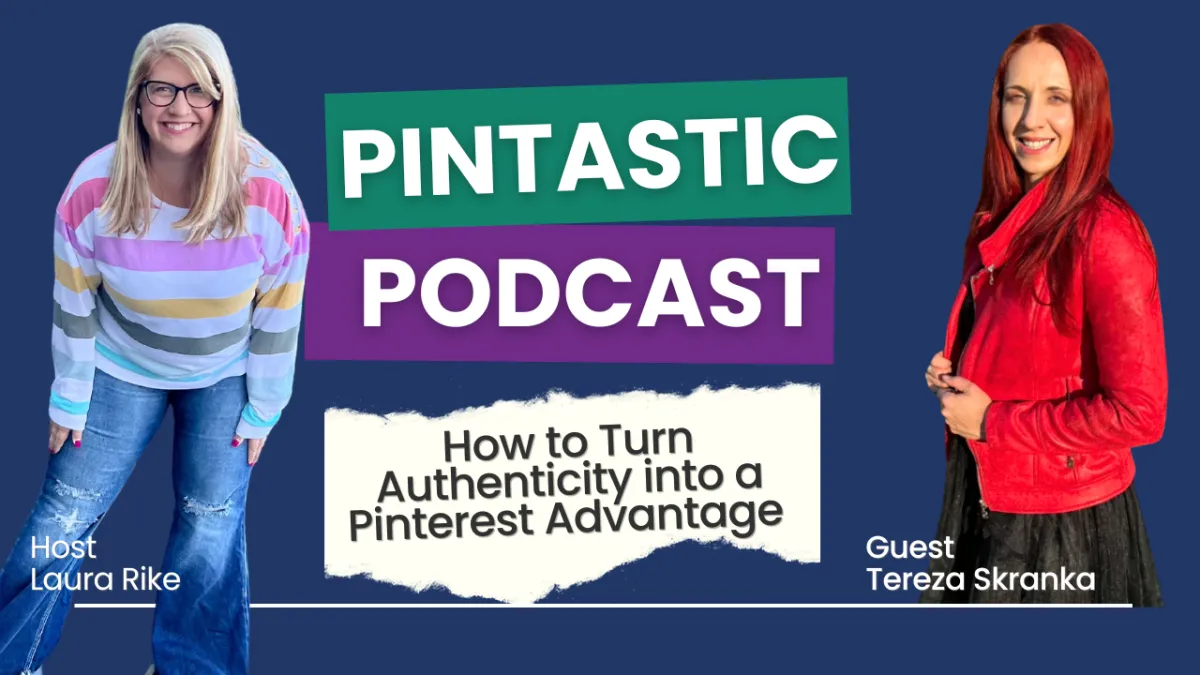
That’s what came up in this week’s episode of the Pintastic Pinterest Podcast when I sat down with Tereza Skranka, founder of The Authenticity Alchemist. Tereza is on a mission to help Human Design Projectors build businesses that feel good, inside and out. After discovering why traditional marketing tactics drained her energy, she developed a new approach rooted in alignment, not hustle.
And if you think that has nothing to do with Pinterest? Think again.
Pinterest is the perfect platform to combine strategic marketing with aligned energy, but only if you know how to set it up. Here’s what we unpacked, and how you can use it to create a strategy that actually works for your business.
How to Align Pinterest Strategy with Human Design for Real Results
How to Align Pinterest Strategy with Human Design for Real Results
Stop Posting Blind and Start With Intentional Keywords
Build Boards That Speak the Right Language
Use Visual Search to Your Advantage
Stop Posting Blind and Start With Intentional Keywords
If you’ve ever posted a gorgeous pin and wondered why it disappeared into the algorithm void, you’re not alone. Pinterest isn’t Instagram. Pretty isn’t enough. Pinterest is a visual search engine, which means keywords are everything.
The mistake most business owners make? They optimize for what they think people are searching for.
For Tereza, that looked like leading with “marketing fails” or “email marketing” in her pin titles. Here’s the problem: her dream clients, the Projectors she helps, aren’t searching for those phrases. They’re searching for things like:
Human Design strategies for Projectors
How to thrive as a Projector in business
Content ideas for Human Design types
See the difference? Those are the keywords that connect the dots between your expertise and your audience’s actual search behavior.
Action Step:
Open Pinterest and start typing a phrase your audience would use, like “Human Design Projector.” Pay attention to the suggestions that pop up. Those are your keywords. Use them in your pin titles, descriptions, and even on the pin image itself.
Build Boards That Speak the Right Language
Pinterest doesn’t just look at your pins. It looks at the boards they live on. If your boards are vague, outdated, or too broad, your content gets buried.
During my session with Tereza, we looked at her board titles and saw things like “Projector Marketing Strategy.” Sounds good, right? The problem is, Pinterest doesn’t know what that means. But it knows what “Human Design Projector Tips” means because thousands of users search that exact phrase every month.
Pinterest also categorizes boards under bigger umbrellas, like “Lifestyle” or “Health.” The more closely your boards align with these recognized categories, the easier it is for the algorithm to match your content to the right searches.
Action Step:
Audit your boards. Rename them using clear, searchable phrases your audience would actually type in. Think “Human Design Projector Strategy Guide” or “Content Ideas for Projectors” instead of generic terms like “Marketing Tips.”
Use Visual Search to Your Advantage
Here’s something most creators overlook: Pinterest uses visual recognition to decide where your pins belong. That means your design choices impact not just click-through rates, but discoverability.
When we reviewed Tereza’s pins, we used Pinterest’s “More to Explore” feature to see what her pins were being grouped with. The results? Mostly unrelated content. That’s a red flag. If Pinterest can’t visually match your pin to the right category, it won’t show it to the right people.
So, what do you do? Make sure your pin templates look like they belong in the niche you’re targeting. Colors, fonts, even image style all send signals to the algorithm. And yes, your text overlay matters.
Action Step:
Choose one of your pins and click the little magnifying glass on Pinterest to see its visual matches. If they don’t look like your niche, redesign. Use bold, keyword-rich headlines and images that reflect your content theme.
Why Alignment + Strategy Beats Hustle Every Time
Tereza’s story is proof that marketing doesn’t have to feel like forcing a square peg into a round hole. By focusing on keywords her audience is already searching, building boards that make sense to the algorithm, and designing pins that visually match her niche, she’s creating a marketing plan that works without burnout.
And you can do the same. The beauty of Pinterest is that it rewards clarity, not constant posting. A few optimized pins can bring traffic for months, sometimes years, if they’re done right.
Final Pin Drop
If you’ve been trying to “do all the things” on Pinterest and still aren’t seeing results, maybe it’s time to simplify. Stop guessing what your audience wants and start creating content they’re already looking for.


